Grades 5 & 6
SPEAK SPHERE
PUBLIC SPEAKING CHALLENGEBOOK TALK
Introduction
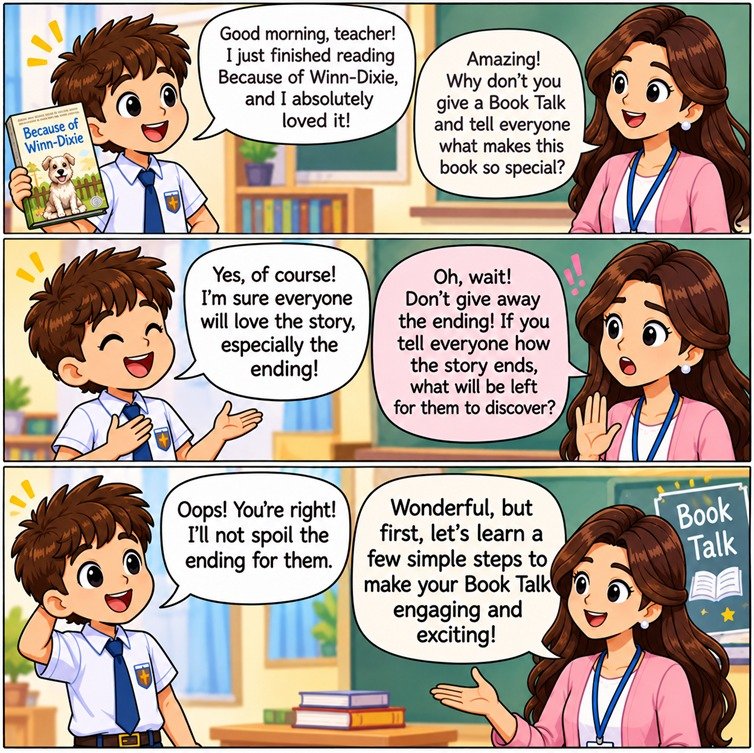
What is a book talk?
A book talk is a short and exciting presentation where you talk about a book, share its most interesting parts and tell others why they should read it. Your goal is to make your audience curious and excited to read the book!

How does a book talk help us develop public speaking skills?

How to prepare a book talk?
A successful book talk has four key parts that make your presentation interesting and engaging:
(1) Opening: Hook Your Audience (2) Summary (3) Impression: Share your opinion! (4) Closing.
Let’s explore each part one by one!
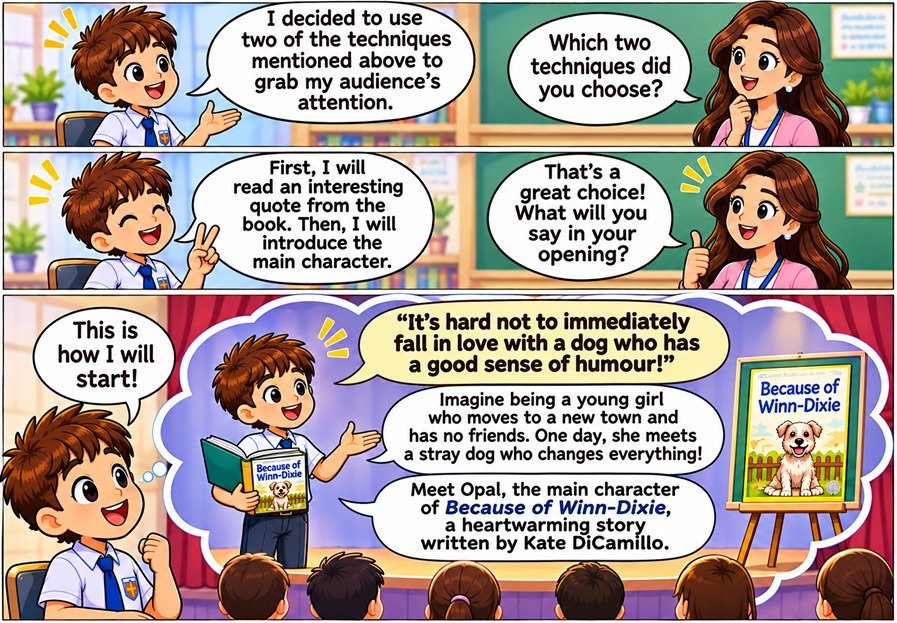
1. Opening: Hook Your Audience
You can use either one or a combination of these techniques to grab your audience’s attention:
- Read an interesting quote from the book
- Ask your audience a thought-provoking question
- Introduce the main character
- Begin by acting out a short scene from the book
- Speak in the voice of the main character and introduce the story from their point of view
- Use a prop from the story to create an interesting opening
- Use facial expressions and gestures to show an emotion experienced by a character
Remember to mention the title and author of the book
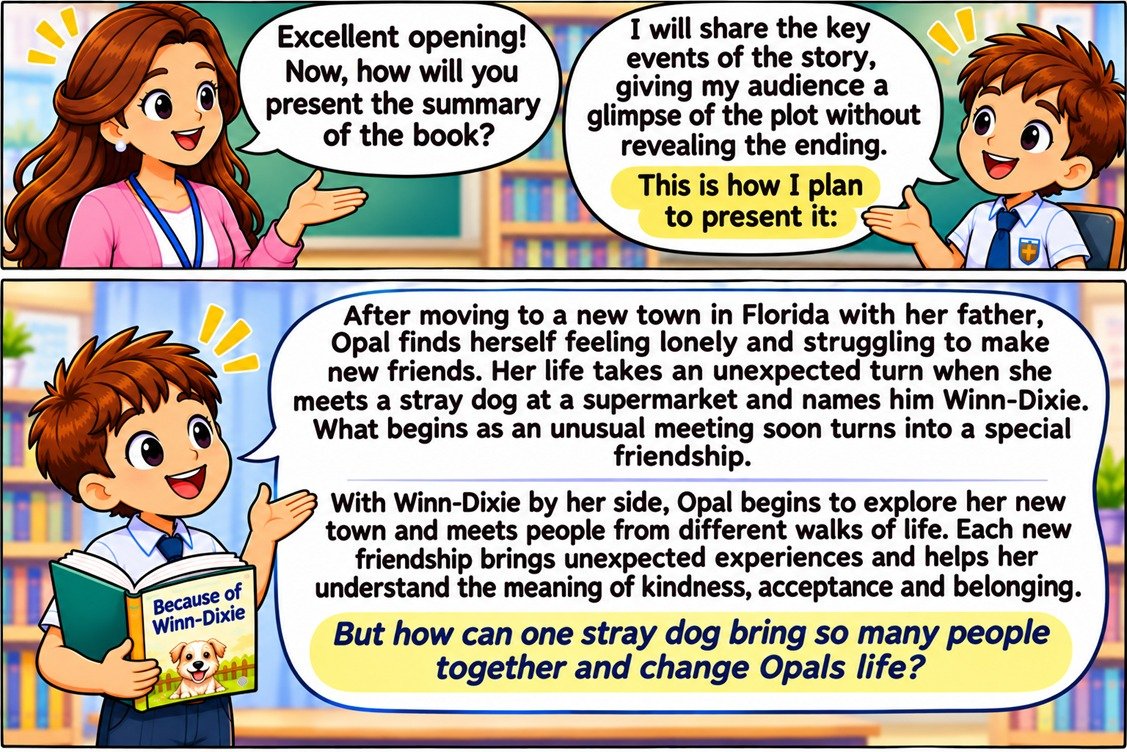
2. Summary
Share the main events or challenges from the story. Give your audience a glimpse of the plot and spark their curiosity to discover what happens next.
Avoid explaining the entire story or revealing the ending or any major surprises!
3. Impression: Share your opinion!
Share your personal thoughts and feelings about the book. Talk about what you enjoyed, what caught your attention and what made the story special to you.
Express your thoughts with enthusiasm and help your audience understand what makes the book worth reading!

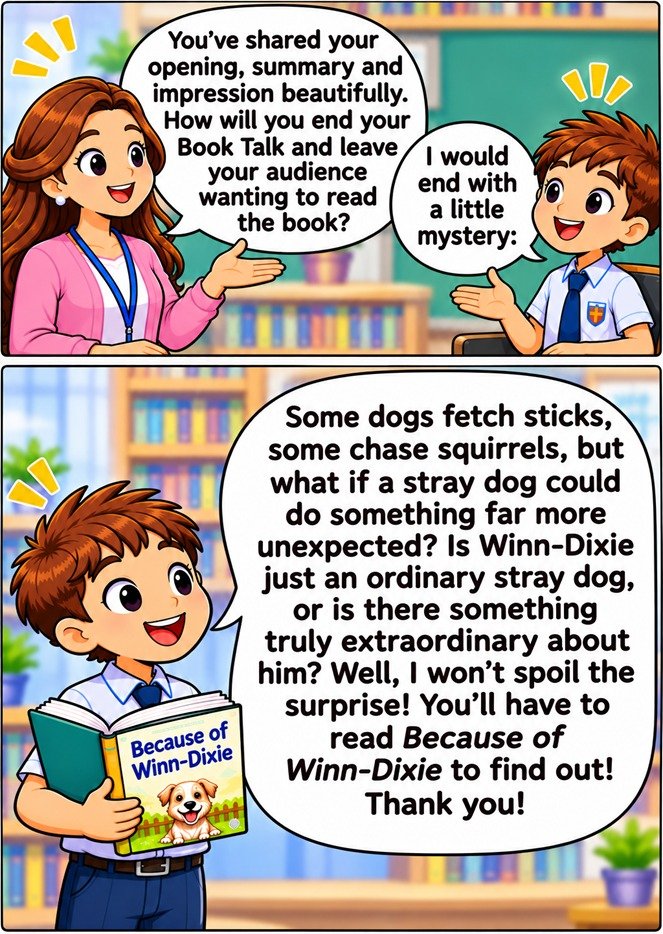
4. Closing
Leave your audience with something to think about. End your book talk with a memorable statement, an interesting quote or a thought-provoking question.
You can also use a cliffhanger (an exciting or suspenseful ending that leaves your audience curious to know what happens next).
Are You Ready?
Let's bring the four parts together and see the final draft of Book Talk in action!
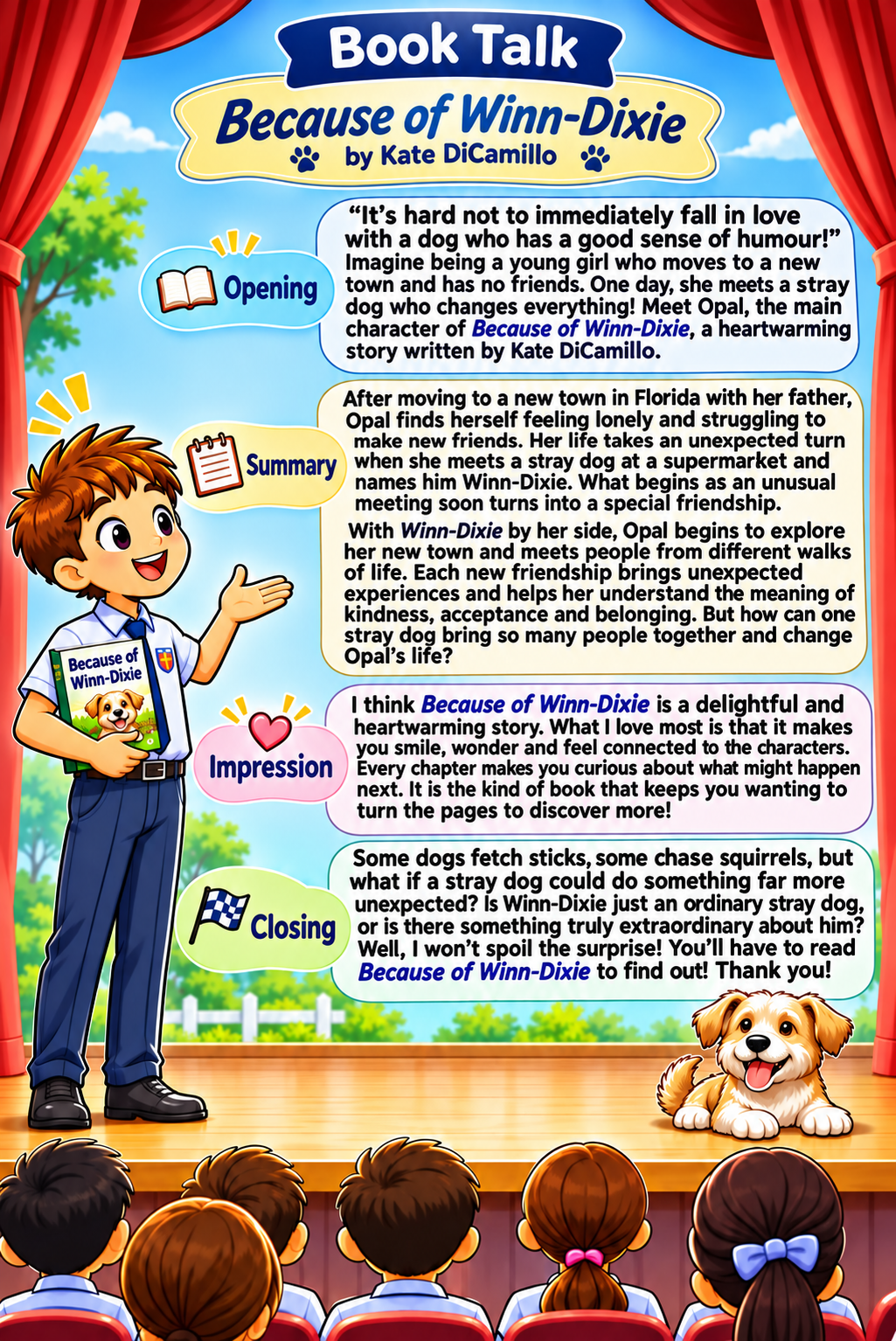
Check out the videos given below to see some examples of book talks.
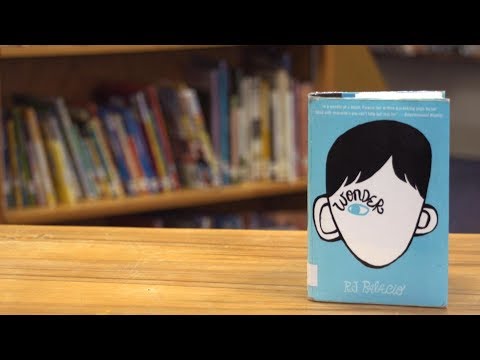
Example 1:
Book Talk on ‘Wonder’

Example 2:
Book Talk on ‘Diary of a Wimpy Kid’
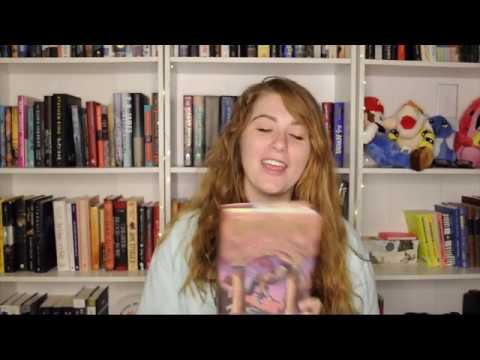
Example 3:
Book Talk on ‘Harry Potter and the Sorcerer's Stone’
Presentation Tips
Since this is a public speaking competition, let's go through some important presentation tips to help you deliver your Book Talk confidently and effectively!
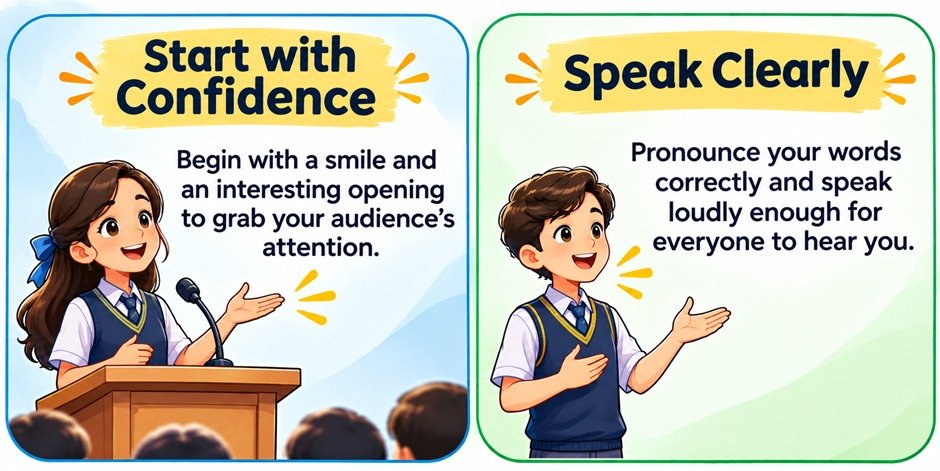
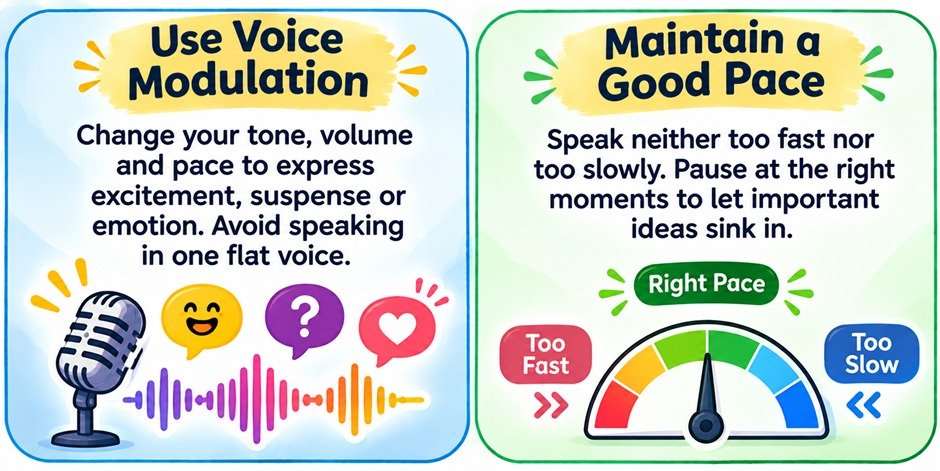
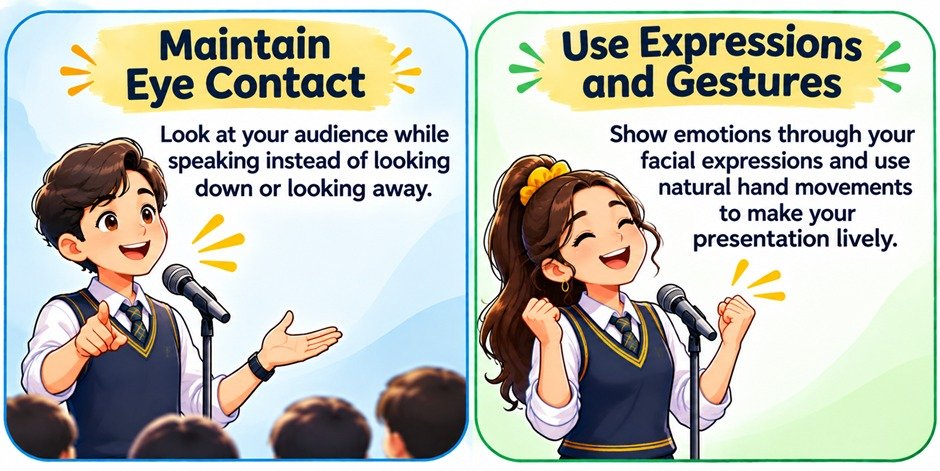
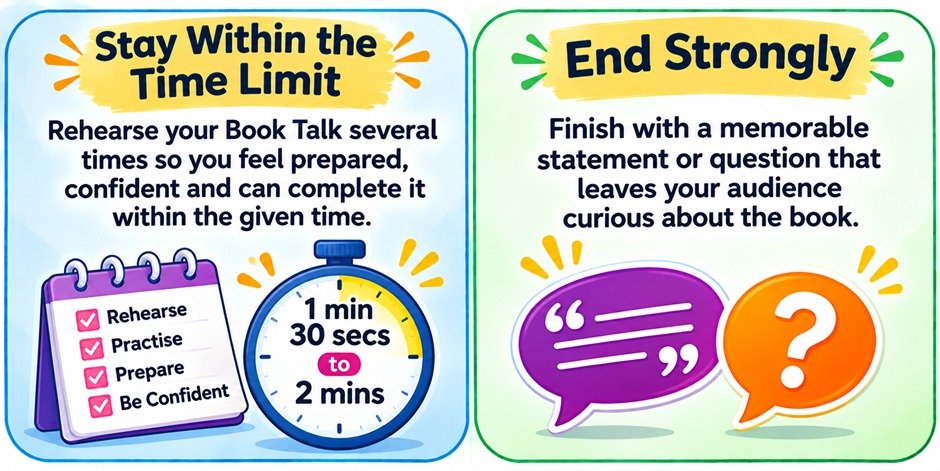
Know Your Rubric!
The rubric is a guide that shows how your book talk presentation will be scored on the day of the competition.
Think of the rubric as your writing checklist! Use it while you rehearse to check that your book talk includes everything you need.
Traits Rubric Grades 5 & 6 (For Students)
(Total: 25 points)
| Beginning (1 point) |
Getting There (2 points) |
Good (3 points) |
Very Good (4 points) |
Excellent (5 points) |
|
|---|---|---|---|---|---|
|
A. My Book Knowledge & Understanding
Key Question: Do I understand my book, its characters, storyline and important events? |
I found it difficult to explain my book, its characters or its main events. | I shared a few details about my book, but I missed important information. | I explained the main storyline and some important details about my book. | I showed a good understanding of my book, its characters and key events without revealing the ending. | I showed a clear understanding of my book and shared interesting details that made my audience curious to read it. |
|
B. My Content & Organisation
Key Question: Have I organised my Book Talk with an interesting opening, a clear summary, my personal impression and a memorable conclusion? |
I missed most of the four parts of my Book Talk. My ideas were unclear and lacked organisation. | I included some parts of my Book Talk, but I missed one or more of these: opening, summary, personal impression or closing. My ideas needed better organisation. | I included all four parts: opening, summary, impression and closing. However, some parts needed more detail or better organisation | I presented all four parts clearly. My opening introduced the book, my summary highlighted key events, my impression shared my thoughts, and my closing ended my presentation effectively. | I presented all four parts effectively and in a well-organised sequence. My opening captured attention, my summary created curiosity without spoilers, my impression expressed my personal thoughts, and my closing left a memorable impact. |
|
C. My Word Choice & Grammar
Key Question: Have I used interesting and appropriate words, correct grammar and well-structured sentences? |
I used limited vocabulary and made frequent grammar mistakes that affected my presentation. | I used simple or repeated words and made some grammar mistakes. | I used suitable vocabulary and mostly correct grammar to express my ideas. | I used a good range of descriptive words and correct sentence structures to make my presentation interesting. | I used varied, expressive and precise vocabulary with excellent grammar to communicate my ideas effectively. |
|
D. My Creativity & Audience Engagement
Key Question: Have I used creative ideas to capture my audience's attention and keep them interested? |
I found it difficult to make my Book Talk interesting or capture my audience's attention. | I tried to make my Book Talk interesting, but I needed more creative ideas to engage my audience. | I included some interesting ideas and made an effort to keep my audience interested. | I used creative ideas and engaging techniques to capture and maintain my audience's attention. | I presented my Book Talk in an original and memorable way that kept my audience curious and engaged throughout |
|
E. My Overall Presentation
Key Question: Have I presented confidently with clear speech, good voice modulation, eye contact and effective body language? |
I found it difficult to speak clearly, maintain eye contact or present confidently. | I tried to speak and present confidently, but my voice, expressions or body language needed improvement. | I spoke clearly most of the time and used some eye contact, expressions and gestures. | I presented confidently, maintained good eye contact and used suitable voice modulation, expressions and gestures. | I presented confidently and naturally, using clear speech, excellent voice modulation, expressive body language and effective delivery. |
How will the competition be conducted?
Students must prepare and practise their Book Talk beforehand. They should be familiar with their presentation and deliver it confidently during the competition without reading from a paper or written script.
Each student must present their Book Talk within 1 minute 30 seconds to 2 minutes maximum. Students may choose any English-language novel appropriate to their reading level for their Book Talk.
Each student will individually present their Book Talk in front of the judges and audience. The Book Talk should include four essential parts: (a) Opening; (b) Summary; (c) Impression; (d) Closing.
Students may use optional props, costumes, character role-play or creative techniques to make their presentation engaging.
Students will be evaluated on five traits, with each trait carrying a maximum of 5 points, for a total of 25 points. (Kindly check ‘Know Your Rubric’ section)
- Book Knowledge & Understanding
- Content & Organisation
- Word Choice & Grammar
- Creativity & Audience Engagement
- Overall Presentation