Grades 3 & 4
SPEAK SPHERE
PUBLIC SPEAKING CHALLENGENARRATIVE SPEECH
Introduction
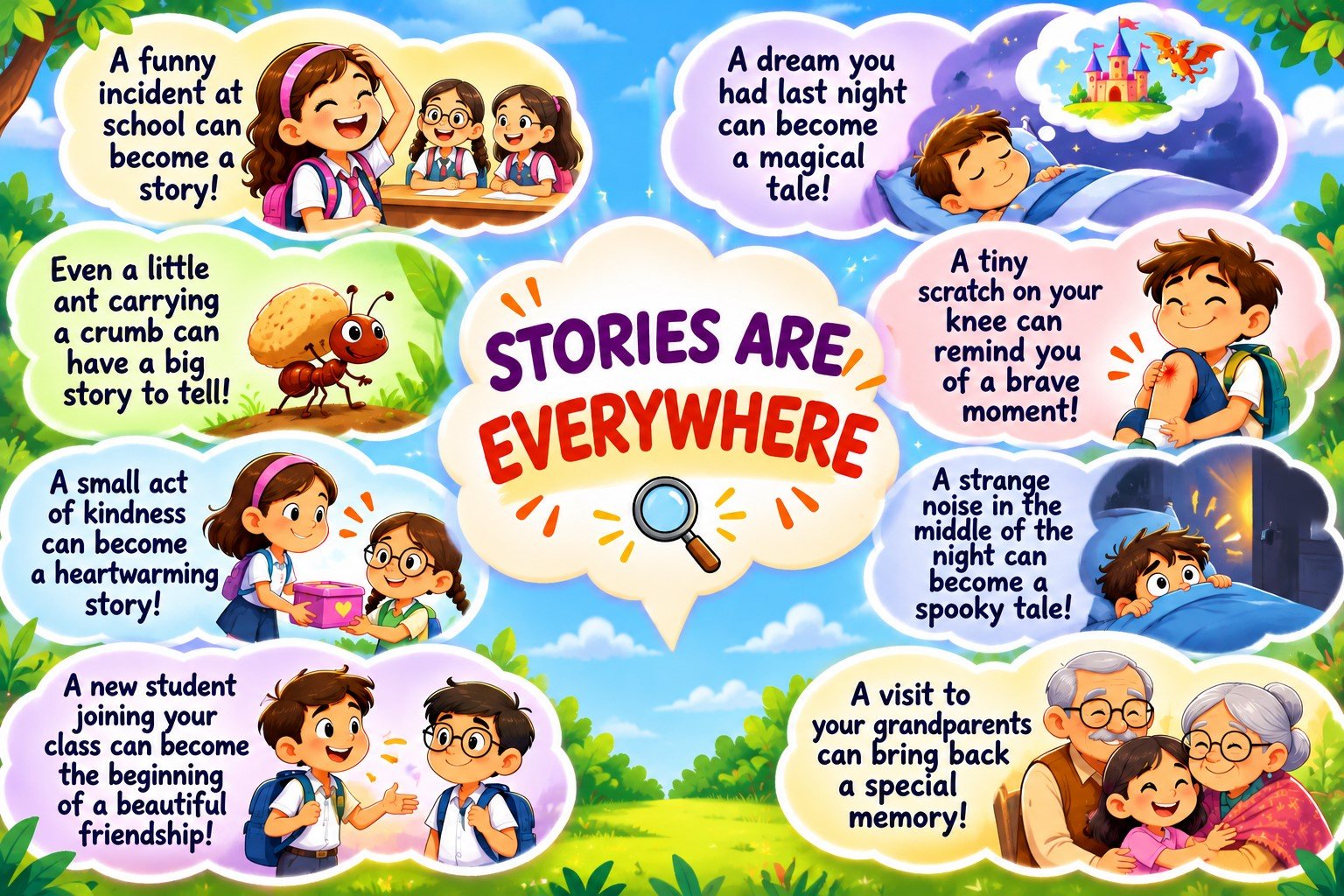
Stories are not just found in books. They happen around us, in our homes, schools, playgrounds and even in our imagination!
All you need is just an exciting idea, a little imagination and the courage to share it!
What is a narrative speech?
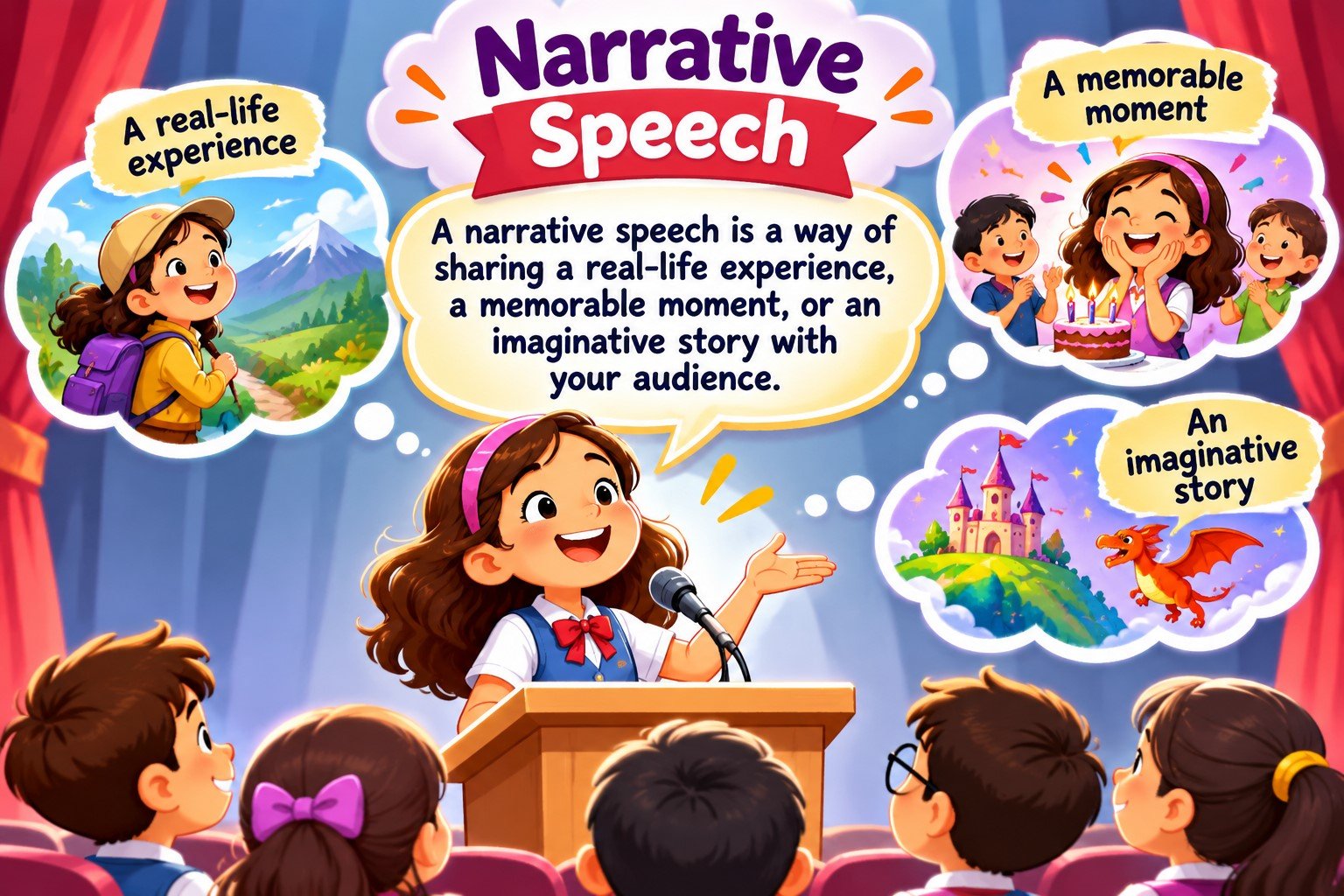
> A good narrative speech has a clear beginning, middle and ending. It takes the audience through events and helps them imagine what happened.
> Remember: A narrative speech is not just about telling a story. It is about making your audience feel part of the experience!
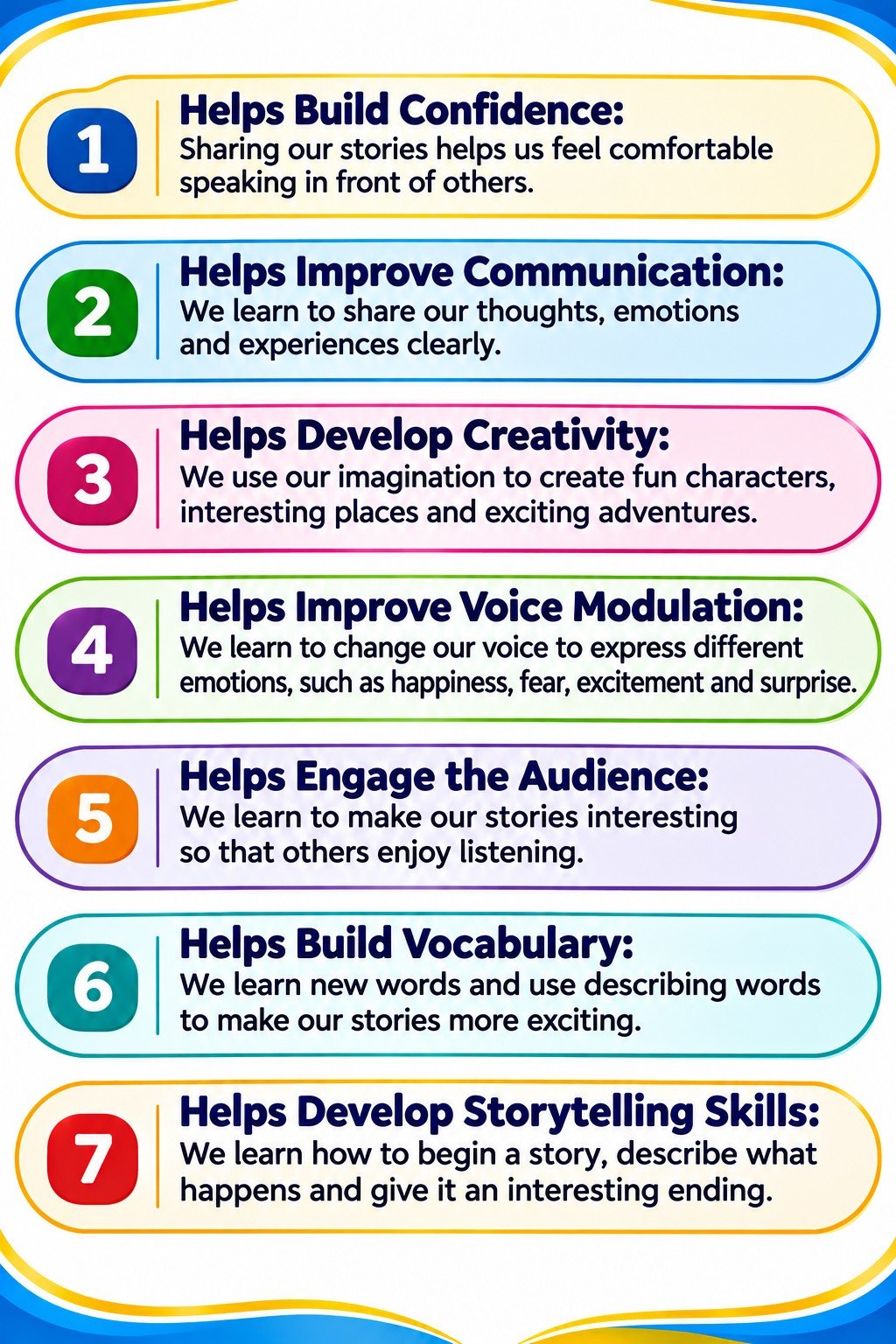
How does a narrative speech help us develop public speaking skills?
Narrative speaking helps us become better and more confident speakers.
How to prepare a narrative speech?
Follow these simple steps to create an interesting and memorable speech.
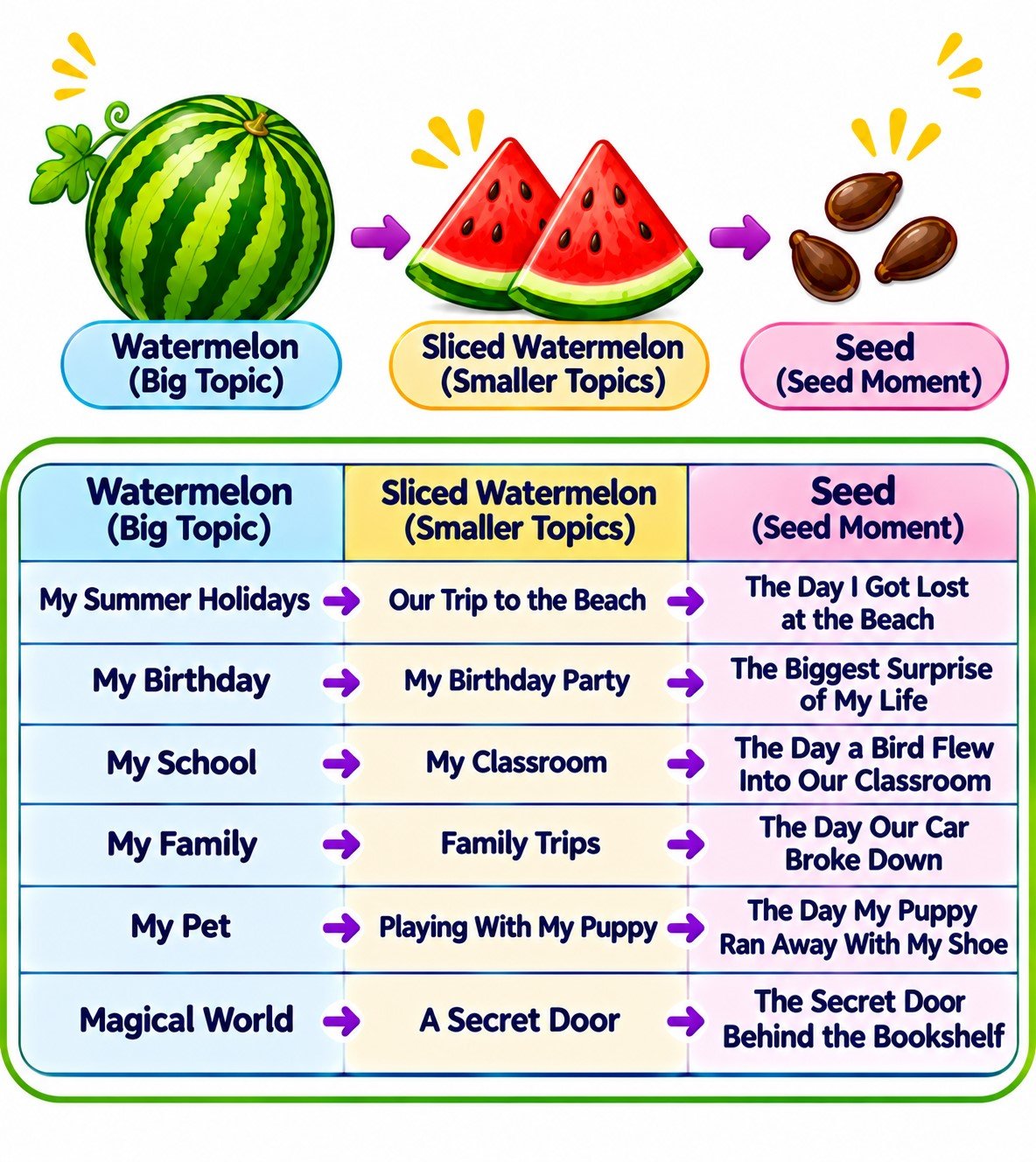
Step 1: Choose Your Topic – Zoom In on a Seed Moment
Think of a watermelon! 🍉
A whole watermelon is like a big topic. A slice is one specific moment, and a seed is the small idea that can grow into an interesting story.
Step 2: Beginning
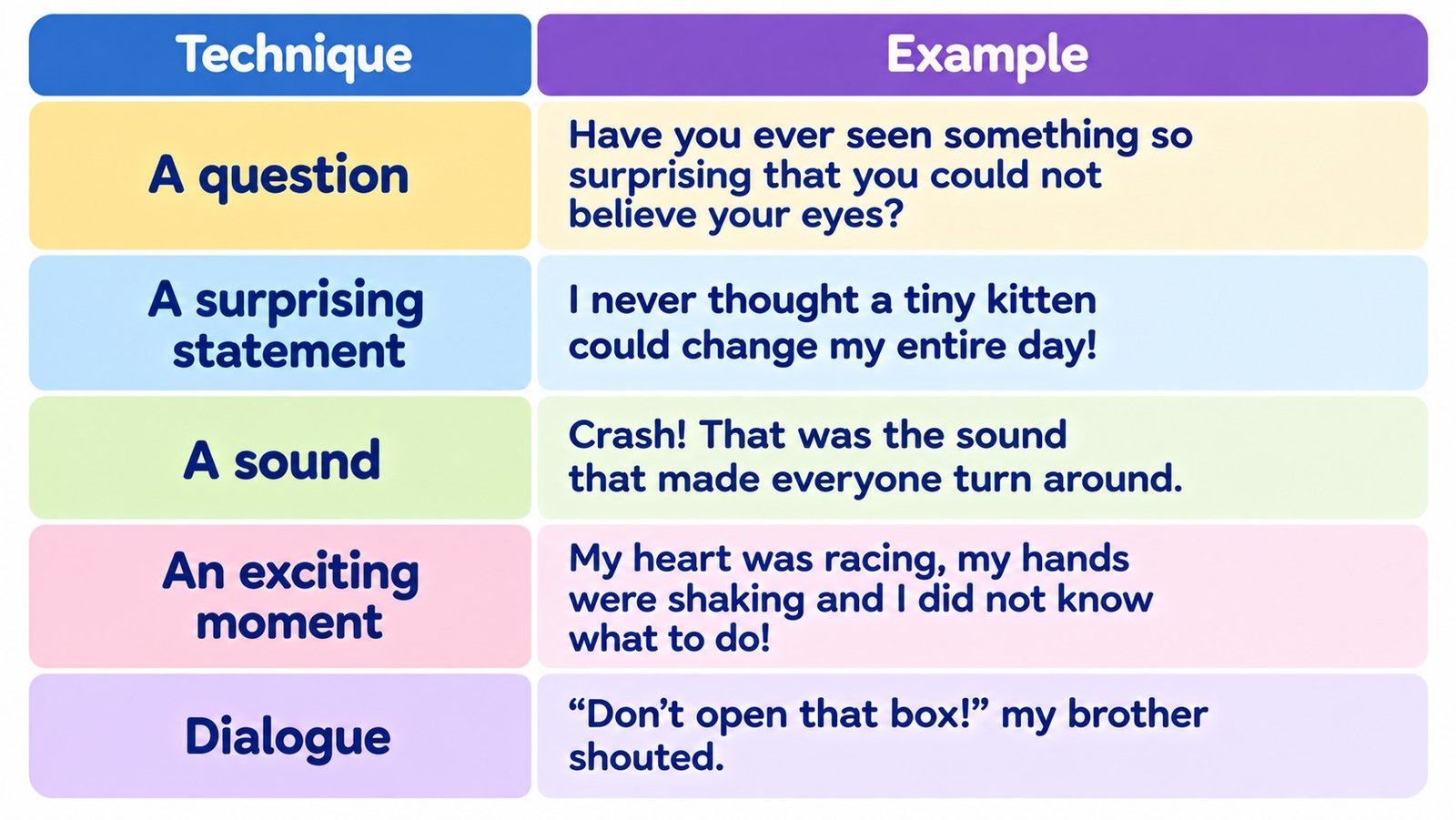
Start with an interesting hook
A hook is an interesting opening that grabs your audience's attention.
You can start your speech with any of these:
Step 3: Middle
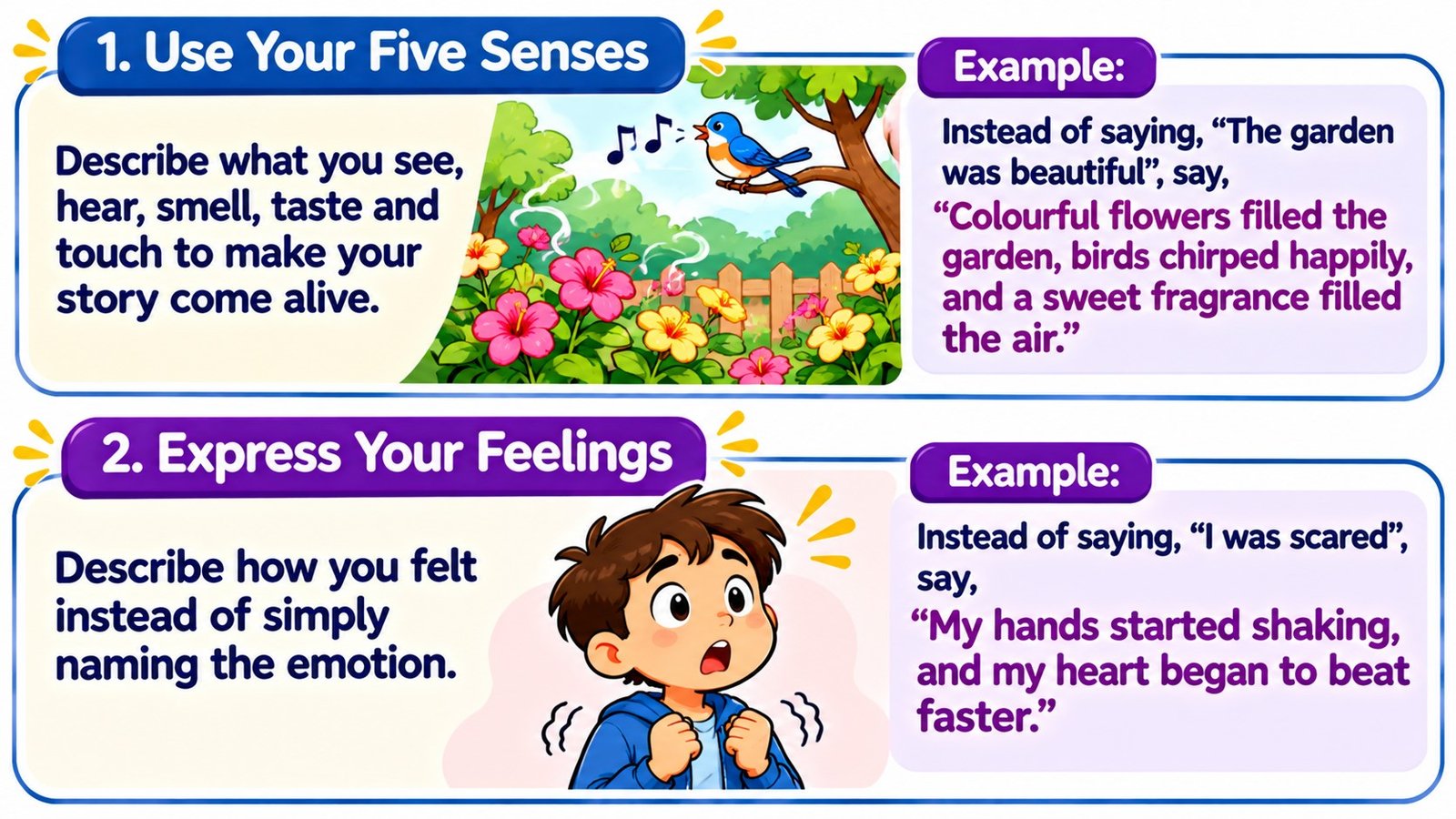
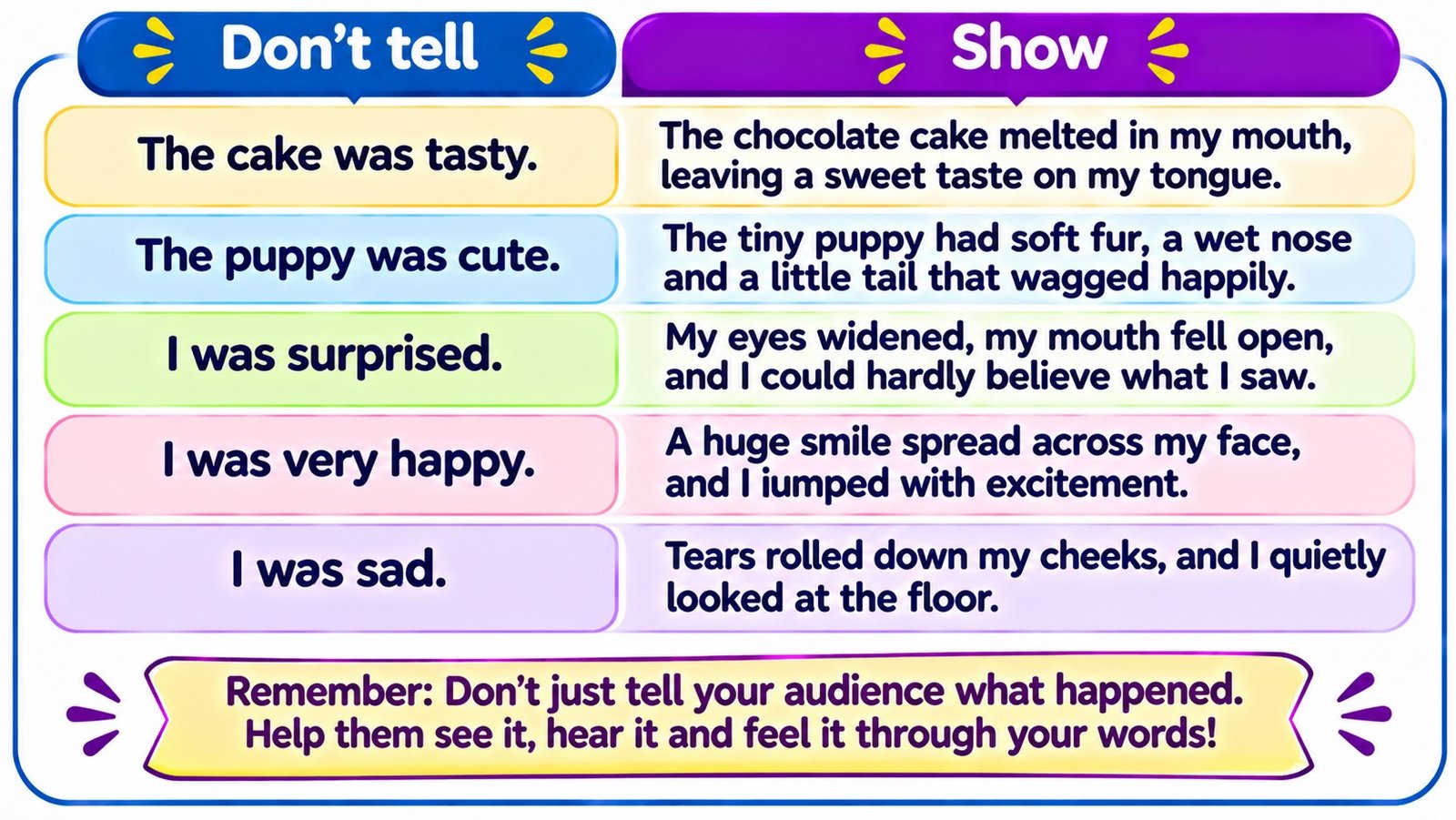
Show; Don’t Tell
Do not just tell your audience what happened. Help them imagine the experience through descriptive words, emotions and details.
Additional Example
Step 4: Ending
End with a memorable conclusion
Do not stop your speech suddenly. Give your audience a satisfying and meaningful ending.
You can end your speech with any of these:
- Share what you learned.
- Explain how the experience changed you.
- End with a thoughtful sentence.
- Share a funny or surprising final moment.
Are You Ready?
Let's bring the four parts together and see the final draft of Narrative Speech in action!
Good morning, respected judges, teachers and my dear friends.
My name is [Your Name], and I am from Grade [3/4].
Today, I am going to take you through a moment when I faced my biggest fear.
Have you ever been so scared that your legs felt like jelly? Well, that happened to me on a day I will never forget!
It was a sunny Saturday, and my family had gone to an adventure park. I was excited to try all the rides, but when I saw the giant zipline, my smile disappeared.
The zipline stretched high above the ground. I could hear the wind whistling past the trees and people shouting with excitement. My hands became sweaty, and my heart started beating faster.
"Come on! You can do it!" my dad encouraged me.
"But it's so high!" I replied, stepping backwards.
I watched other children slide down happily. I wanted to try, but I was too frightened. Then my dad held my hand and said, "Being brave doesn't mean you aren't scared. It means you try even when you are scared."
I took a deep breath, put on my safety helmet and slowly climbed the steps. My knees were shaking as I sat in the harness.
"Ready?" asked the instructor.
I closed my eyes and shouted, "Let's do this!"
Whoosh! I zoomed through the air! The cool wind rushed against my face. I could see the green trees below and hear my family cheering.
When I reached the other side, I jumped up with joy. "I DID IT!" I shouted.
That day, I learned something important. Courage is not about having no fear. It is about facing your fear and trying anyway.
And that is how I turned my biggest fear into my happiest adventure!
Thank you!
Presentation Tips
Knowing your story is important, but presenting it well is equally important.
Let's go through some important presentation tips to help you deliver your Narrative Speech confidently and effectively!


Know Your Rubric!
The rubric is a guide that shows how your writing will be scored on the day of the competition.
Think of the rubric as your writing checklist! Use it while you rehearse to check that your narrative speech includes everything you need.
Traits Rubric Grades 3 & 4 (For Students)
(Total: 25 points)
| Beginning (1 point) |
Getting There (2 points) |
Good (3 points) |
Very Good (4 points) |
Excellent (5 points) |
|
|---|---|---|---|---|---|
|
A. Story Idea and Focus
Key Question: Have I chosen an interesting moment and developed it creatively? |
My story idea is unclear or does not match the topic. | I have a story idea, but it needs to be clearer with more interesting details. | My story is clear and focused on one moment, with some interesting details. | My story is interesting and focused on one specific moment, with good details. | My story is creative, engaging and focused on one specific moment, with meaningful details. |
|
B. My Story Order
Key Question: Do I use an interesting opening, a clear middle and a memorable ending to tell my story? |
My story has no clear beginning, middle or ending. | I try to start my story with an interesting opening, but some parts are missing or out of order. | I use an interesting opening, explain what happens in the middle and give my story a clear ending. | I begin with an interesting hook, explain the events in a clear order and end with a meaningful closing. | I begin with an attention-grabbing hook, build excitement as my story unfolds and finish with a memorable ending that leaves the audience thinking. |
|
C. Descriptive Storytelling
Key Question: Do I bring my story to life using Show, Don’t tell technique and expressing feelings and emotions |
I simply tell what happens and use very few descriptions or emotions. | I use a few describing words, but I need to add more details and emotions to my story. | I describe some events and express a few emotions to make my story more interesting. | I use descriptive details and express emotions to help my audience picture the events in my story. | I use vivid descriptions and express emotions effectively, making my audience feel as though they are part of my story. |
|
D. Voice Modulation and Body Language
Key Question: Do I use my voice and body language effectively while telling my story? |
My voice is difficult to hear or understand, and I use very few facial expressions or gestures. | I sometimes speak clearly, but I need to improve my voice modulation, facial expressions and gestures. | I speak clearly and use some voice modulation, facial expressions and gestures. | I use suitable voice modulation, clear speech, facial expressions and natural gestures throughout most of my speech. | I use clear and expressive voice modulation, natural gestures and facial expressions to bring my story to life. |
|
E. Confidence and Audience Engagement
Key Question: Do I speak confidently, maintain eye contact and keep my audience interested? |
I find it difficult to speak confidently, continue my speech or look at the audience. | I try to speak confidently, but I need to improve my eye contact and connection with the audience. | I speak with some confidence, maintain some eye contact and keep the audience interested most of the time. | I speak confidently, maintain good eye contact and connect well with the audience. | I speak confidently and naturally, connect with my audience and keep them interested throughout my speech. |
How will the competition be conducted?
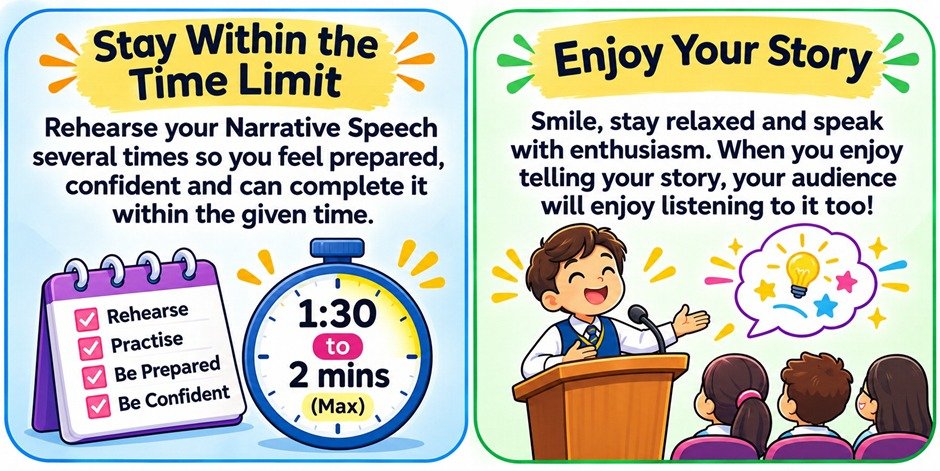
Students must prepare and rehearse an original Narrative Speech beforehand. They should be familiar with their presentation and deliver it confidently during the competition without reading from a paper or written script.
Each participant will be given 1 minute 30 seconds to 2 minutes maximum to deliver their speech. Participants should rehearse beforehand to ensure they complete their speech within the given time.
Participants may choose their own topic based on a personal experience, memorable incident, interesting moment, or an imaginary incident. They are encouraged to focus on one specific moment or adventure (seed moment) rather than narrating a broad topic.
Each participant will individually present their Narrative Speech in front of the judges and audience. The participants should follow the narrative speech structure taught in the study material.
| Beginning/Opening | Middle | Ending |
|---|---|---|
|
|
|
Students will be evaluated on five traits: (Kindly check ‘Know Your Rubric’ section)
- Story Idea and Focus
- Story Order
- Descriptive Storytelling
- Voice Modulation and Body Language
- Confidence and Audience Engagement