Grades 3 & 4
Competition: The Creative Pen
Descriptive Writing(Describe with Interesting Details)
Introduction
 Look at the picture. Take a moment to notice the colours, shapes and details.
If you were describing this picture, what sentence would you write?
Now compare these two sentences:
SENTENCE 1 The sun was setting behind the mountains.
SENTENCE 2 The bright sun went down behind the mountains, turning the sky orange, pink and purple.
Which sentence helps you picture the sunset better? Why?
Sentence 2 helps us picture the sunset better because it gives us more details about what we can see.
This is the power of descriptive writing. It makes us imagine with the help of interesting words and details.
What is descriptive writing?
Descriptive writing uses words to give a clear picture of a person, place, or event.
It helps the reader imagine what they can see, hear, smell, feel, or taste.

| Read the example given below: | Think About: |
|---|---|
|
Kabir and I walked onto the sunny beach. The sand was warm and soft under our feet. The sun was shining brightly, making everything glow. Kabir smiled and said, “It's a beautiful day.” I nodded in agreement. We could hear the waves gently crashing, like a soft, calming song. The air smelled salty and fresh, like the sea. I felt happy, calm, and relaxed as I enjoyed the beautiful day at the beach. |
|
|
In the beach description above, the writer describes the warm sun, the sound of the waves, the feel of the sand, and the smell of the salty ocean. This helps readers see and experience the place being described. |
|
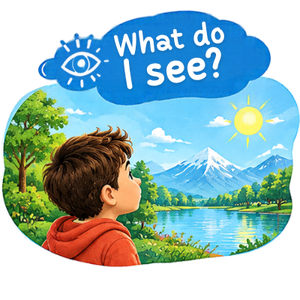 What do I see?
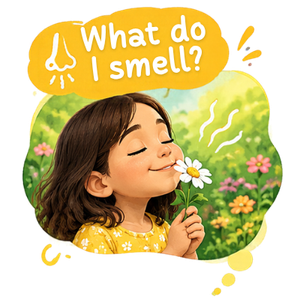 What do I smell?
 What do I hear?
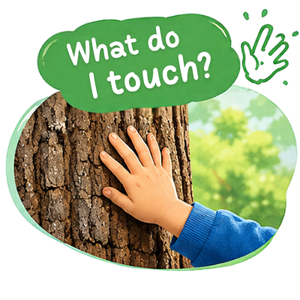 What do I touch?
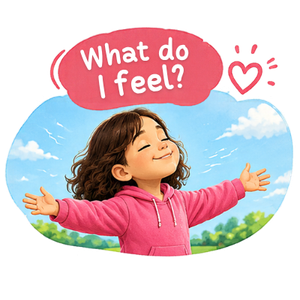 What do I feel?
How to expand your sentences?
We can make a simple sentence more interesting by adding details. To do this, answer these five questions:
| Question | Ask Yourself |
|---|---|
Who? |
|
What? |
|
Where? |
|
When? |
|
Why? |
|
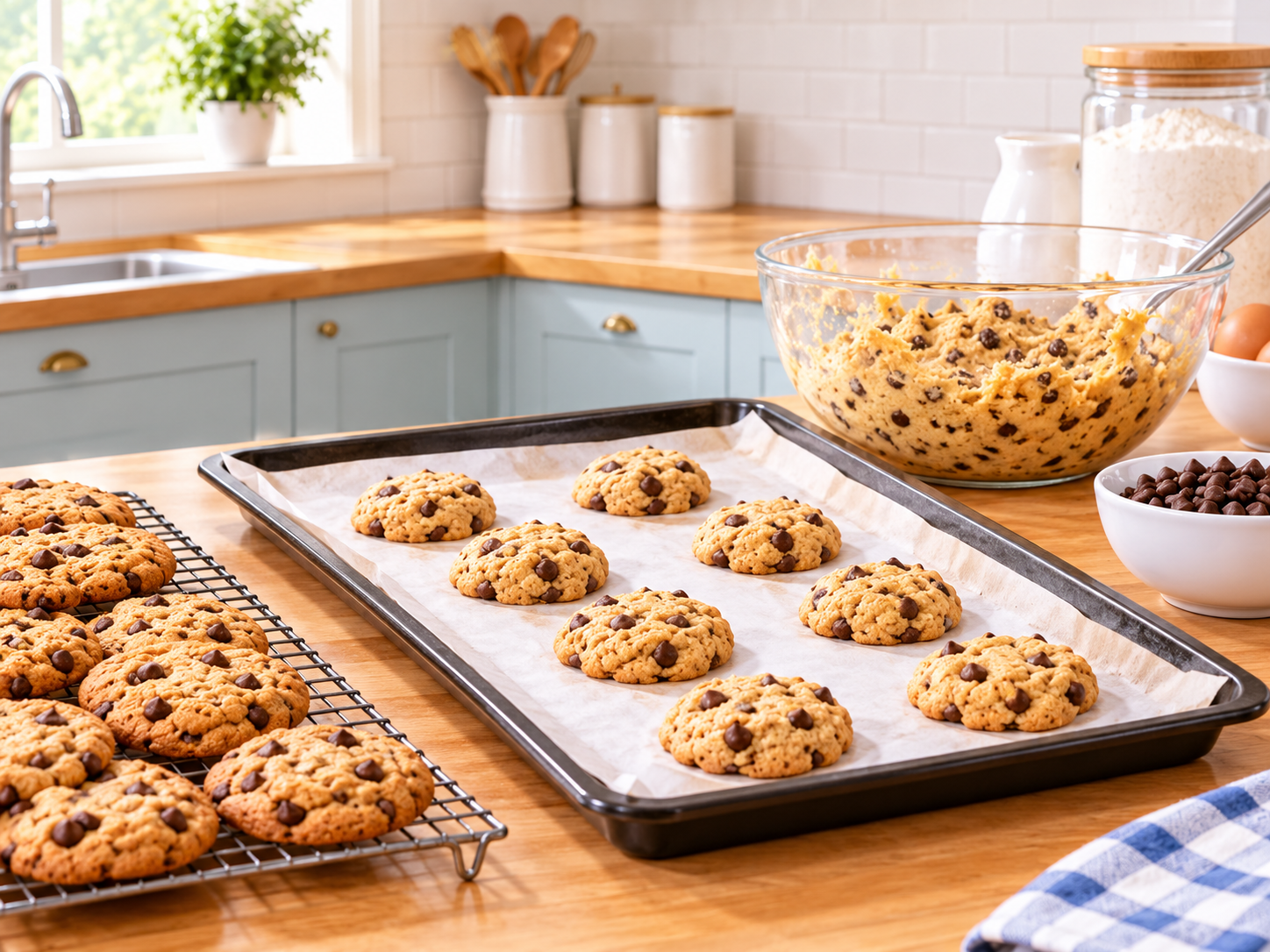
Short Sentence : He baked cookies |

Short Sentence : The girl walked through the garden |
||
|---|---|---|---|
| Who? | He | Who? | The girl |
| What? | He baked | What? | The girl walked |
| Where? | in his neat and clean kitchen | Where? | through the colourful garden |
| When? | yesterday afternoon | When? | early in the morning |
| Why? | to make delicious chocolate chip cookies | Why? | to enjoy the sweet smell of roses and cool breeze |
Expanded Sentence:

Notice the sensory details (see, touch, taste, hear, smell).
|
Expanded Sentence:

Notice the sensory details (see, touch, taste, hear, smell).
|
||
How to write a descriptive essay in four easy steps?
Follow these 4 simple steps to help you write a good descriptive essay.
Step 1: Get Familiar With the Topic
The example below shows how your writing question will be presented during the competition.
Before you start writing, read the whole question example carefully. Make sure you understand what you are being asked to describe.
Example
A VISIT TO THE DUBAI SOUK
Imagine that you are visiting a busy souk in Dubai with your family.
Look around and notice the colours, people, shops, smells, sounds and things you can see.
Your Task- Write a descriptive piece of 100–150 words about your visit to the Dubai souk.
Describe what you see, hear, taste, touch or smell. Include the interesting shops, colourful items, people and something you do during your visit.
At the end, describe your favourite part and how you feel.
Step 2: Plan Your Ideas
Before you start writing, think about what you want to include. Make a few quick notes.
| What I See? | What I Hear? | What I Smell? | What I Taste? | What I Touch? | What I Feel? |
|---|---|---|---|---|---|
| colourful shops | people chatting | fragrant spices | dates | soft clothes | excited |
| beautiful lanterns | shopkeeper’s calling | sweet perfumes | fresh juice | - | curious |
| bright clothes | sounds of the market | fresh food | sweets | - | amazed |
Step 3: Start Writing and Add More Details
Now it is time to start writing!
Begin with a simple sentence and make it more interesting by adding details. For example:
|
Simple Short Sentence:
I walked through the souk.

|
|
|---|---|
| Who? | Me and my family |
| What? | walked |
| Where? | through the busy Dubai souk |
| When? | in the evening |
| Why? | to explore the colourful shops |

Notice the sensory details (see/ touch/ taste/ hear/ smell) this sentence uses:
1. What I see
→
souk, colourful shops
|
|
Now, let us use the ideas from Step 2 and expand the sentences like the example above!
Give your writing a title, A Visit to the Dubai Souk.
A Visit to the Dubai Souk
In the evening, me and my family walked through the busy Dubai souk to explore the colourful shops. As we entered, I saw many shops filled with beautiful lanterns, bright clothes and shiny souvenirs. The souk was crowded with people chatting and shopkeepers calling out to customers. I could hear the cheerful sounds of the market all around me.
The air smelled wonderful because of the fragrant spices and sweet perfumes. We walked past shops selling fresh food and delicious sweets. I tasted some juicy dates and drank a glass of fresh watermelon juice. I also touched some soft, colourful clothes.
My favourite part was looking at the beautiful lanterns because they made the souk look magical. I felt excited, curious and amazed during our visit. It was a wonderful evening that I will always remember.
Step 4: Know Your Rubric
The rubric is a guide that shows how your writing will be scored on the day of the competition.
Think of the rubric as your writing checklist! Use it while you write and after you finish to check that your writing includes everything you need.
It helps you understand what you need to do to write your best descriptive essay.
Traits Rubric Grades 3 & 4 (For Students)
(Total: 25 points)
| Beginning (1 point) |
Getting There (2 points) |
Good (3 points) |
Very Good (4 points) |
Excellent (5 points) |
|
|---|---|---|---|---|---|
|
A. My Ideas
Key Question: Can I share a clear and creative idea? |
My idea is not clear. I give very few details. | I have an idea, but I need more details. | I have a clear idea and give some details. | I have a clear and interesting idea with good details. | I have a very creative idea with lots of great details. |
|
B. My Story Order
Key Question: Does my story have a beginning, middle, and ending? |
My story is hard to follow. It may not have a clear beginning, middle, or ending. | My story has some order, but some parts may be confusing. | My story has a beginning, middle, and ending. | My story is easy to follow from beginning to end. | My story flows very well and keeps the reader interested. |
|
C. Words I Use
Key Question: Do I use new, fun and describing words? |
I use mostly simple words. I use 0-1 interesting or describing words. | I use 2-3 interesting or describing words. I still repeat some words. | I use 4-5 interesting or describing words that fit my writing. | I use 5-6 interesting and describing words. I do not repeat words too much. | I use more than 6 fun, new, and describing words that make my writing exciting. |
|
D. My Sentences
Key Question: Are my sentences clear and complete? |
I have 1-3 complete sentences. Rest sentences are not complete or are hard to understand. | I have 4-5 complete sentences. Most of my sentences are short and simple. | I have 6-7 complete sentences. I use some short and some longer sentences. | I have 8-10 complete sentences. I use a good mix of short and longer sentences. | I have 10+ complete sentences. I use different sentence lengths to make my writing clear and fun to read. |
|
E. My Grammar & Spelling
Key Question: Have I used the following correctly?
|
I make many mistakes in grammar, spelling, punctuation, or capital letters. My writing can be hard to understand. | I make quite a few mistakes, but my reader can still understand my writing. | I make some mistakes, but most of my writing is correct and easy to understand. | I make very few mistakes. I use grammar, spelling, punctuation, and capital letters correctly most of the time. | I make almost no mistakes. My grammar, spelling, punctuation, and capital letters are used correctly. |
✏️ Your Turn!
Use the four steps you have learnt to write a descriptive essay of your own.
A Morning at the Beach
Imagine that you wake up early and visit the beach with your family.
Your Task: Write a descriptive piece of 100-150 words about your morning at the beach.
Begin by describing what you notice when you arrive at the beach. Describe the sea, sky, sand, waves, boats, birds and people around you. Think about what you see, touch, smell, hear or taste. Include something interesting that happens during your visit, such as finding a shell, seeing a crab or watching a boat sail by.
As your writing comes to an end, describe how the beach looks in the morning and how you feel about your visit.
A Surprise at the Zoo
Imagine that you are visiting a zoo when something unexpected happens.
Your Task: Write a descriptive piece of 100-150 words about your visit to the zoo.
Begin by describing what you notice when you arrive at the zoo. Describe the animals, trees, ponds, colourful signs and people around you. Think about what you see, touch, smell, hear or taste. Include something surprising that happens during your visit, such as a monkey grabbing a hat, a colourful bird flying nearby or a baby animal coming close to you.
End by describing your favourite animal and how you feel about your visit to the zoo.